New apps published to the App Store increased 84% year-over-year in Q1 2026, according to Sensor Tower data. That means the app you shipped last month is competing against nearly double the field from a year ago - for the same search results, the same browse slots, and the same users.
Most ASO guides tell you to optimize your keywords and call it a day. That covers one channel. There are eight. This guide maps every discovery channel available to you in 2026 - including one that didn’t exist two years ago.
Q:How do I improve my app's discoverability?
A: App discoverability depends on 8 channels: App Store Search (the biggest - optimize keywords, title, subtitle), Browse and Categories (pick the right primary category), Today Tab and Getting Featured (pitch Apple 6-8 weeks early), In-App Events (time-limited content that surfaces in search), Custom Product Pages (targeted landing pages for different audiences), Web-to-Store (SEO drives App Store clicks), Social and Community (Reddit, X, Product Hunt), and AI/LLM Recommendations (the newest channel - structure your web presence so AI tools recommend your app). Most indie devs only optimize for search. Covering all 8 channels compounds your visibility.
- 1.App Store Search is the biggest channel - optimize your 100-character keyword field
- 2.Getting featured requires pitching Apple 6-8 weeks before launch or major update
- 3.In-App Events surface in search results and on the Today tab
- 4.Custom Product Pages let you target up to 35 different audiences
- 5.AI/LLM recommendations are the newest discovery channel - and nobody is optimizing for it yet
- 6.Each additional channel compounds your visibility - don't rely on search alone
The discoverability problem in 2026
The App Store has a discoverability crisis. The number of apps keeps growing, but the number of search result slots, featured positions, and category rankings stays the same. For indie developers, this creates a winner-take-all dynamic where established apps dominate visibility and new apps struggle to get found.
Replying to an indie dev asking how to get their weather app discovered
“Nobody finds anything on the App Store itself. Discoverability on there is terrible, and probably always will be. Apple promotes what they expect to be popular. It's winner-take-all.”
The frustration is real, and the numbers back it up. Indie developers routinely see 50x download gaps between their apps and less capable competitors who simply got there first.
Indie dev sharing real download numbers showing the discoverability gap
“The main competitor of my first app apparently has 20k monthly downloads, I barely get 400 after 5 months in the store. It sucks because the reason I built the app was because that tool and many others seem to be pretty incompetent.”
The solution isn’t to give up on the App Store. It’s to stop treating keyword optimization as your entire strategy and start thinking about discoverability as a portfolio of channels.
The 8 discovery channels (and how to optimize each)
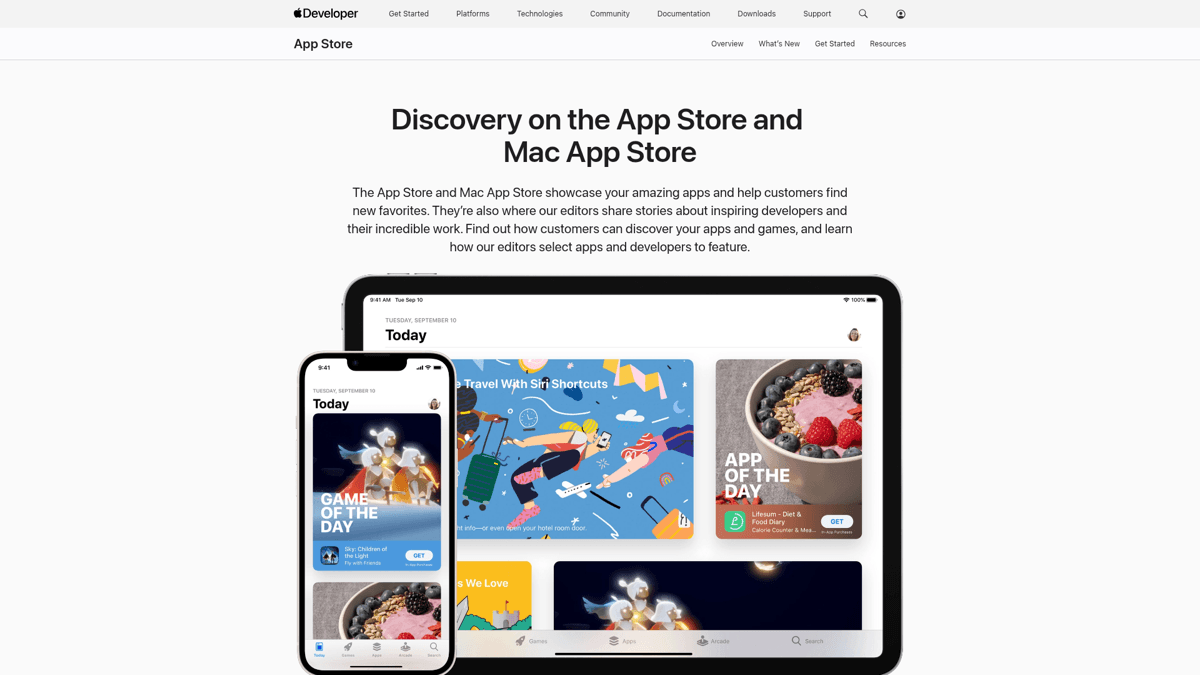
| Channel | Impact | Effort | Time to Results | Best For |
|---|---|---|---|---|
| App Store Search | High | Medium | 2-4 weeks | All apps |
| Browse & Categories | Medium | Low | Immediate | Niche apps |
| Getting Featured | Very High | High | 6-8 weeks | Quality apps |
| In-App Events | Medium | Medium | 1-2 weeks | Content/game apps |
| Custom Product Pages | Medium | Medium | 1-2 weeks | Multi-audience apps |
| Web-to-Store | High | High | 1-3 months | Apps with websites |
| Social & Community | Medium | Medium | 1-4 weeks | Indie/niche apps |
| AI/LLM Recommendations | Emerging | Low-Medium | Unknown | Early movers |
Channel 1: App Store search
Search is the biggest discovery channel on the App Store, driving an estimated 65-70% of all downloads. When someone types a query into the search bar, Apple’s algorithm considers your app title, subtitle, keyword field, and historical performance to decide where you rank.
Title, subtitle, and keyword field
Your app title (30 characters) and subtitle (30 characters) carry the most weight. Put your primary keyword in the title if it fits naturally. The keyword field gives you 100 characters of invisible metadata - use single words separated by commas, no spaces, no duplicates of words already in your title or subtitle. Check our complete guide to the 100-character keyword field for the full strategy.
Research keywords
Use an ASO tool to find keywords with decent search volume and low competition. Focus on long-tail phrases where you can realistically rank in the top 10.
Optimize your title and subtitle
Put your strongest keyword in the title. Use the subtitle for a secondary keyword or a compelling value proposition. Both fields are indexed for search.
Fill the 100-character keyword field
Single words only, comma-separated, no spaces. Don't repeat words from your title or subtitle. Use the localization trick - set a secondary locale to get an additional 100 characters.
Monitor and iterate
Track your keyword rankings weekly. Drop keywords that aren't moving after 2-3 update cycles. Replace them with new candidates from your research.
A basic keyword optimization workflow for App Store search
AI-powered keyword research
ASO Maniac automates keyword discovery with AI agents that research search volume, difficulty, and competitor rankings. Agent skills and a CLI let tools like Claude Code run keyword analysis without dashboard clicking. Try it at asomaniac.com.
Search ads as a discovery accelerator
Apple Search Ads can jump-start your visibility while organic rankings build. Even a small daily budget ($5-10) on your most important keywords puts you at the top of search results and generates data about which keywords convert. Use the conversion data to refine your organic keyword strategy - the keywords that convert as ads will convert organically too.
Channel 2: Browse and categories
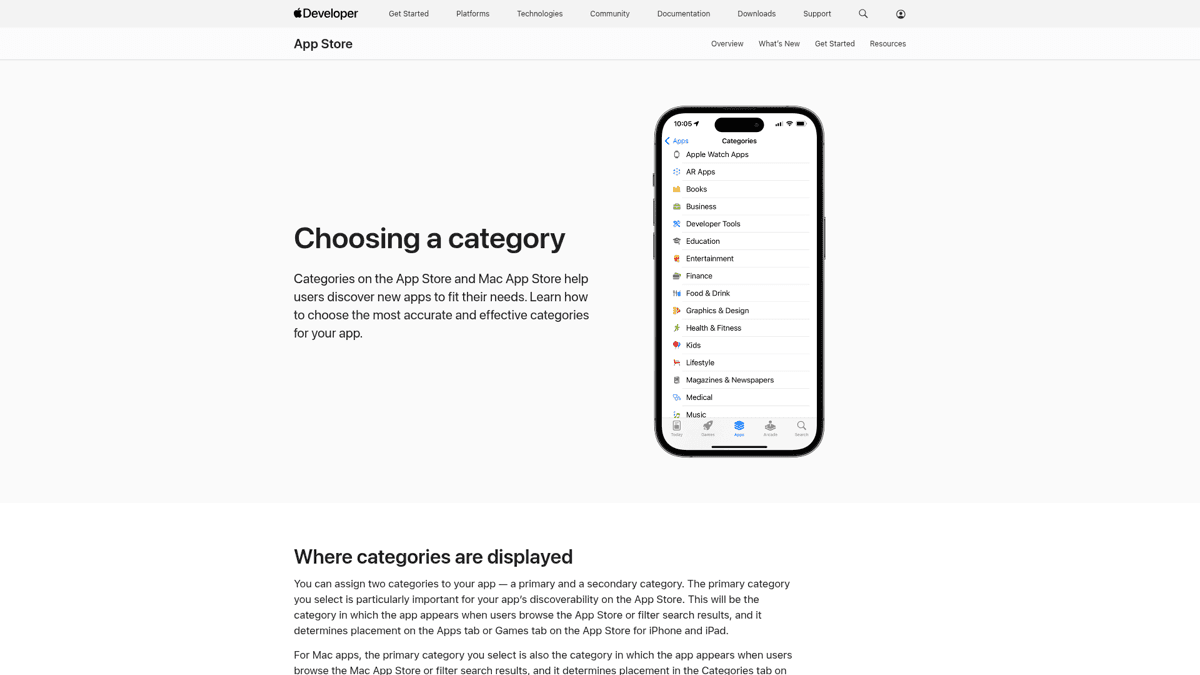
When users browse the App Store by category, your primary category determines where you show up. Choosing the right category matters more than most developers realize - a top-20 ranking in a smaller category drives more downloads than being invisible in a competitive one.
You can set both a primary and a secondary category. The primary category is what users see; the secondary gives you a second chance to appear in browse results. If your app fits multiple categories (a fitness app that also tracks nutrition, for example), use the secondary category to capture traffic from both.
Pro tip: check how many apps are in each candidate category. A category with 5,000 apps is much easier to rank in than one with 50,000. Sometimes the less obvious category is the better strategic choice.
Channel 3: Getting featured on Today tab
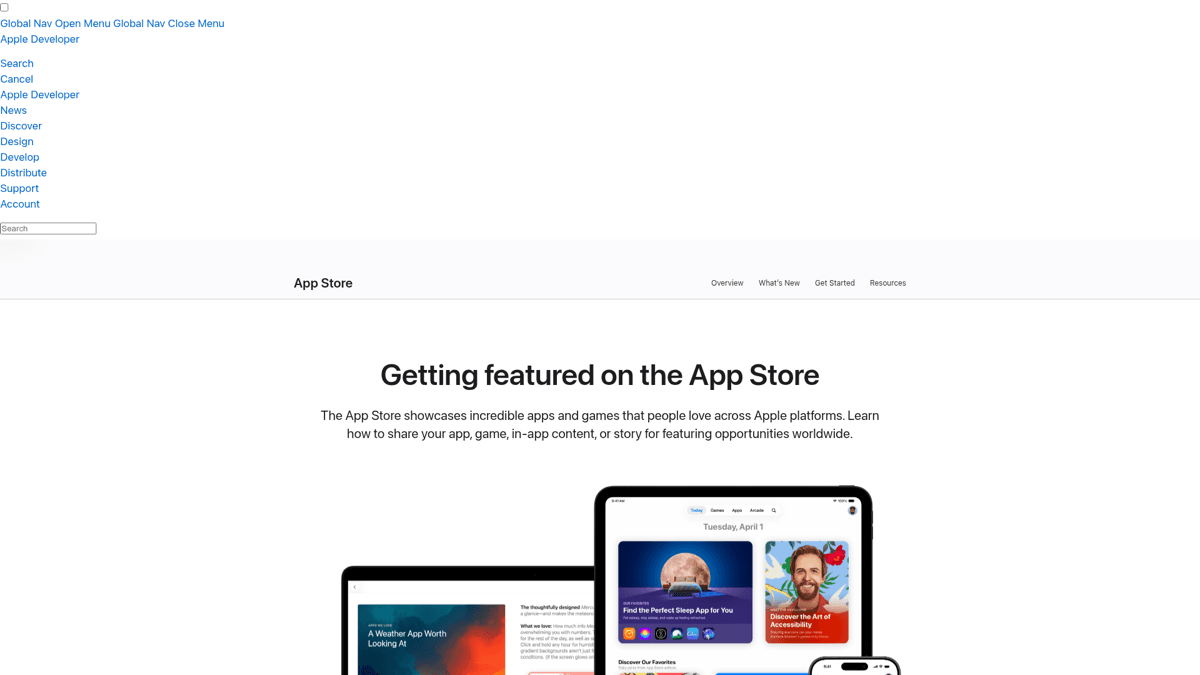
Getting featured on the App Store’s Today tab is the single highest-impact discovery event available. A feature can drive tens of thousands of downloads in a single day. Apple’s editorial team curates these features, and yes - they actively look for indie apps with great design and unique functionality.
Build something genuinely good
Apple's editorial team looks for polished UI, unique functionality, accessibility support, and apps that use Apple's latest technologies (widgets, Live Activities, visionOS).
Submit your pitch 6-8 weeks early
Use Apple's self-service feature nomination form on App Store Connect. Pitch before a major update or launch, not after. Include high-quality screenshots and a clear description of what makes your app special.
Prepare promotional artwork
Apple needs specific assets for featured placements. Have your promotional artwork ready in the required sizes before you pitch. Check Apple's guidelines for current specs.
Time it with a major update
Features are more likely when you have a newsworthy update - new platform support, major redesign, seasonal content, or integration with new Apple technologies.
How to pitch your app for an App Store feature
⚠️ Apple doesn't guarantee featuring
Submitting a pitch doesn't mean you'll get featured. Apple's editorial team makes independent decisions based on quality, timing, and editorial fit. Focus on what you can control: build a great app, submit a compelling pitch, and make sure your App Store listing is polished. Even if you don't get a Today tab feature, the editorial team may include your app in category collections or seasonal roundups.
Channel 4: In-App Events
In-App Events are time-limited experiences that appear directly in App Store search results, on your product page, and on the Today tab. They were designed for games (tournaments, seasonal events) but work for any app with timely content - workout challenges, learning streaks, seasonal themes, limited-time features.
The discovery benefit is significant: In-App Events get their own card in search results, visually distinct from regular app listings. This means your app can appear twice in the same search - once as a regular result and once as an event. Apple also promotes events on the Today tab and in personalized recommendations.
In-App Events as a discovery hack
Create recurring time-limited events (weekly challenges, monthly themes, seasonal content) to appear in App Store search as a separate card alongside your regular listing. Each event is a new chance to capture attention from users who scrolled past your main listing.
You can run up to 5 simultaneous events and schedule up to 10 in advance. Each event has its own metadata (name, description, media) that Apple indexes for search. Use different keywords in your event metadata than in your main listing to expand your search footprint.
Channel 5: Custom Product Pages
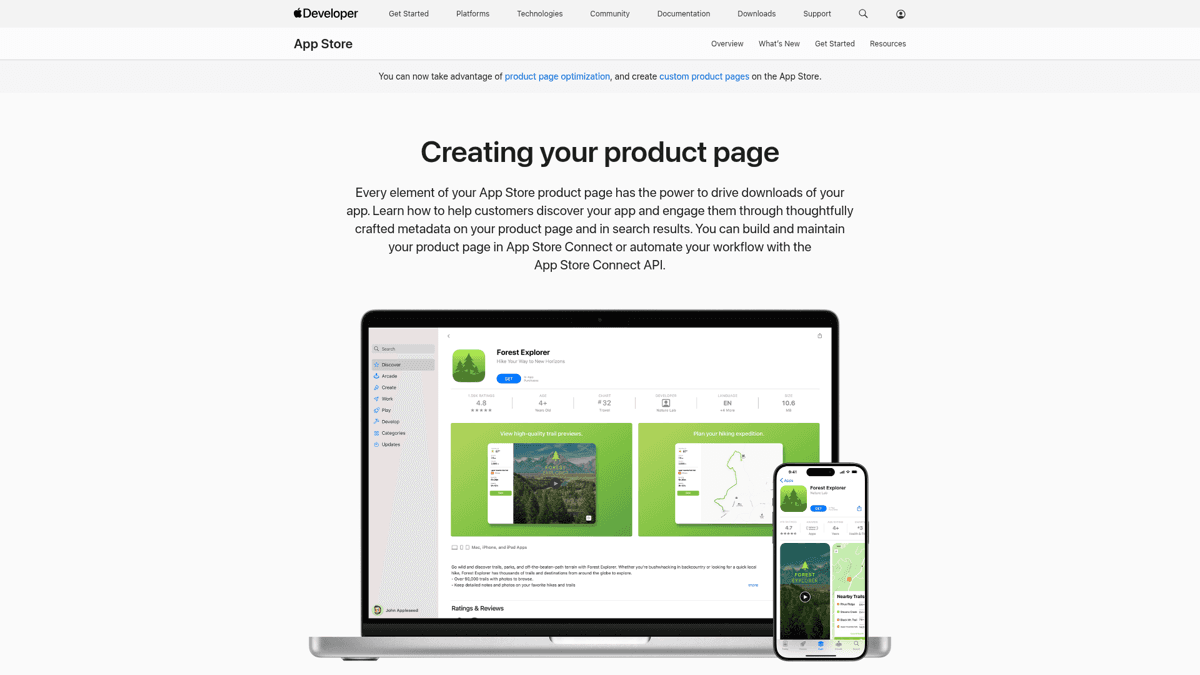
Apple lets you create up to 35 Custom Product Pages, each with different screenshots, app previews, and promotional text. Each page gets a unique URL you can use in ad campaigns, social media, or partner referrals.
The discovery angle: when you run Apple Search Ads with Custom Product Pages, users see screenshots and messaging tailored to their specific search intent. A user searching “meditation timer” sees meditation-focused screenshots; a user searching “sleep sounds” sees sleep-focused screenshots - even though it’s the same app.
Even without paid ads, Custom Product Pages work for organic referral traffic. Share the meditation page URL on meditation communities and the fitness page URL on fitness communities. Each audience sees a product page that speaks directly to their needs.
Channel 6: Web-to-Store funnels
Your app’s website is a discovery channel that operates completely outside the App Store’s ecosystem. When someone Googles “best meditation app” and finds your website, that’s web-to-store discovery. It bypasses App Store search entirely.
Build an SEO-optimized landing page
Target the keywords your ideal users search on Google, not just on the App Store. 'Best [category] app' and '[problem] app' queries have real volume and low competition for many niches.
Add Smart App Banners
Add a single meta tag to your website: <meta name='apple-itunes-app' content='app-id=YOUR_ID'>. Safari shows a native banner at the top of the page linking directly to the App Store. Zero friction.
Create content that ranks
Blog posts, tutorials, and comparison pages targeting your app's problem space. A meditation app could publish 'how to start meditating' guides. Each piece of content is a new entry point to your App Store listing.
Track web-to-install conversion
Use campaign links with unique tokens so you can measure how many App Store visits come from your website. Apple's App Analytics shows downloads by source.
Building a web-to-store funnel that bypasses App Store search
The compounding effect is powerful: web content ranks forever, drives passive traffic, and converts users who would never have found you through App Store search alone. This is especially valuable for indie apps in competitive categories where App Store rankings are locked up by incumbents.
Channel 7: Social and community
Reddit, X/Twitter, Product Hunt, Hacker News, and niche communities are real discovery channels - but only if you approach them authentically. Self-promotion gets downvoted. Genuine participation with occasional mentions of your app drives sustainable traffic.
WeatherGraph developer describing the indie discoverability struggle
“I feel like my app is too hard to find. I've tried optimizing the name and keywords on the App Store but I still don't think it's as discoverable as I'd like, most likely because there are a lot of competing apps in a similar category.”
This developer’s experience is common - and it highlights why social channels matter. When App Store search isn’t working, direct community engagement becomes your best alternative. Developers who share their build process, respond to feedback publicly, and contribute to relevant communities build organic word-of-mouth that no amount of ASO can replicate.
Product Hunt launches can drive thousands of first-day downloads if you prepare properly. Post on Tuesday-Thursday for maximum visibility, have your supporters ready to upvote and comment early, and make sure your App Store listing is optimized before the traffic arrives.
Channel 8: AI and LLM recommendations (the new frontier)
This is the channel nobody is talking about yet - but it’s already changing how users discover apps. More people now ask ChatGPT, Gemini, or Perplexity “what’s the best app for X?” instead of browsing the App Store directly. When an LLM recommends your app, that’s a discovery event with extremely high intent.
AppTweak's official account describing how LLMs are changing app discovery
“More users now ask AI tools like ChatGPT, Gemini, Perplexity which app they should use, instead of browsing the app store directly. This behavior changes the mechanics behind app visibility.”
The question is: how do LLMs decide which apps to recommend? They don’t search the App Store. They synthesize information from the web - your website, review articles, Reddit threads, documentation, and structured data. If your app has a strong, consistent web presence with clear entity signals, LLMs are more likely to recommend it.
Practical advice for developers optimizing for AI-driven discovery
“If LLMs reason in terms of entities and grounded statements, then app store pages should reinforce the same entity signals as the website. Misalignment between web content and app store metadata likely weakens AI app discoverability.”
Build a content-rich website
LLMs need web content to learn about your app. A landing page alone isn't enough. Publish detailed feature pages, comparison articles, and FAQ sections that give AI models concrete information about what your app does and who it's for.
Align entity signals across platforms
Use the same app name, feature descriptions, and value propositions on your website, App Store listing, and social profiles. LLMs look for consistency - misalignment weakens your entity signal.
Get mentioned in third-party content
LLMs weight third-party mentions heavily. Blog reviews, Reddit threads, ProductHunt profiles, and comparison articles all contribute to your app's entity profile in AI models.
Add structured data (FAQ schema, Product schema)
Structured data helps LLMs extract precise facts about your app. FAQ schema for common questions, Product schema for pricing and ratings, and SoftwareApplication schema for app metadata.
How to optimize for AI/LLM app recommendations
⚠️ This channel is emerging - no guaranteed playbook
AI/LLM discovery is real but still evolving. There's no proven formula yet, and LLM recommendations can change with each model update. The advice above is based on how current LLMs process information - it may change. But developers who start optimizing now will have an advantage as this channel grows. At minimum, having a strong web presence helps with web-to-store discovery too, so the effort is never wasted.
Your discoverability audit checklist
Use this checklist to audit your app’s discovery portfolio. Most developers will find they’re only covering 1-2 channels. Each additional channel you activate compounds your overall visibility.
🗺️App Discoverability Audit
Check each channel. How many of the 8 are you actively optimizing?
Search: keyword field filled with 100 characters of researched, single-word keywords
Search: title and subtitle contain your primary keywords
Categories: primary category chosen strategically (not just the obvious one)
Featured: pitched Apple for featuring via App Store Connect nomination form
In-App Events: at least one active or scheduled event
Custom Product Pages: at least 2-3 pages targeting different audiences
Web-to-Store: SEO-optimized website with Smart App Banner
Social: active presence in at least one community relevant to your app
AI/LLM: structured web content that aligns with your App Store metadata
Track your discoverability across channels
ASO Maniac helps you monitor keyword rankings, track competitor visibility, and measure your search performance over time. Combine it with your web analytics and social metrics for a complete picture of your discovery portfolio. Start your free trial at asomaniac.com.
Summary
Most developers optimize for one discovery channel - App Store search - and ignore the other seven. That’s like running a business where 100% of your revenue comes from a single customer. It works until it doesn’t.
The developers who win the discoverability game in 2026 are the ones who diversify their discovery portfolio. Each additional channel compounds your visibility. A well-optimized keyword field plus a featured pitch plus a content-rich website plus authentic community presence creates a flywheel that no single channel can match.
And the smartest developers are already looking at channel 8. AI/LLM recommendations are the newest acquisition lever, and right now the field is wide open. The window to be an early mover won’t stay open forever.
Start with the checklist above. Count how many channels you’re actively optimizing. Then pick the lowest-effort channel you’re missing and add it this week. Discoverability isn’t a one-time optimization - it’s a portfolio you build over time.